
Most people link a stuffy nose to colds or allergy season, so congestion that appears mainly during workouts can be confusing. However, that timing and detail can tell you something.
A nose that clogs up halfway through a run, drips steadily on the ski slopes, or stays blocked for an hour after swimming laps is responding to something about the activity or the environment. Cold air, pollen, and the shape of the nasal passages can all play a part, and each one calls for a different fix.
Working out which one applies to you makes it much easier to breathe comfortably and keep up with the routine you enjoy.
How Exercise Normally Affects Your Sinuses
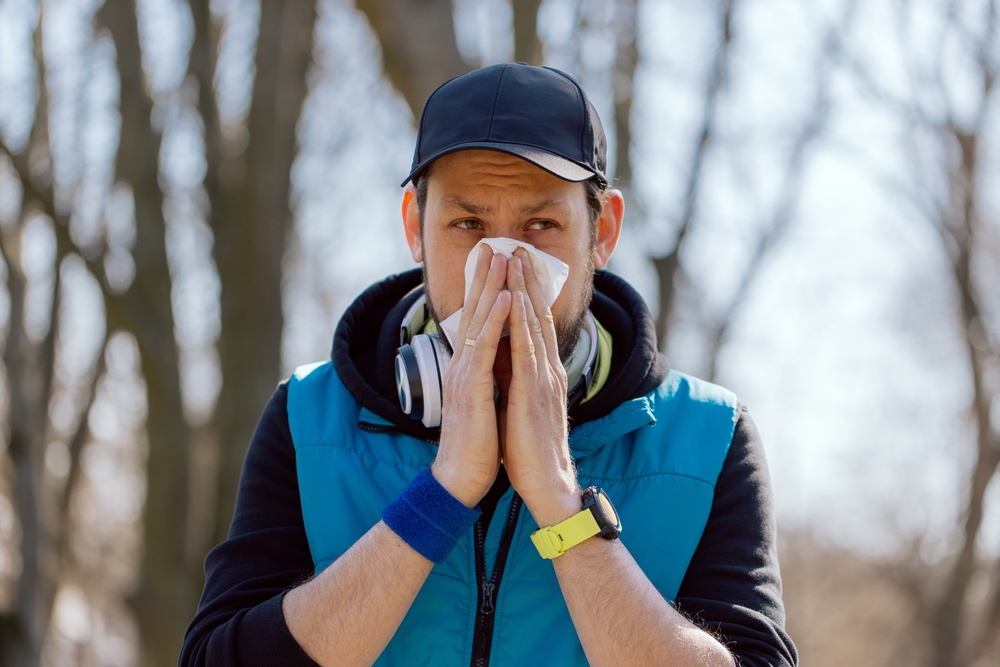
When you start moving, your body releases adrenaline and other stress hormones that prepare it for physical effort. One of their effects is to narrow the blood vessels in the lining of your nose and sinuses. Less blood in those tissues means less swelling, wider nasal passages, and easier airflow. For most people, this effect kicks in within a few minutes of exercise and can last for a while after they stop. It’s one reason a brisk walk can temporarily clear a stuffy nose. If your nose does the opposite and gets more congested as your workout goes on, something is overriding this natural response.
What Is Exercise-Induced Rhinitis?
Rhinitis means inflammation of the nasal lining. Exercise-induced rhinitis describes symptoms that show up during or shortly after physical activity, including congestion, a runny nose, sneezing, and postnasal drip.
It’s common among runners, cyclists, skiers, and swimmers, and it can affect casual gym-goers too. Some people have an allergic form, while others react to temperature, humidity, or chemicals in the air. Because you breathe much faster and deeper during a workout, your nose is exposed to far more of these triggers than it would be at rest.
Three triggers account for most cases, and knowing which one affects you shapes how you manage it.
Cold, Dry Air
Your nose warms and humidifies every breath before it reaches your lungs. When it’s cold, that job gets much harder.
Cold, dry air can trigger a nerve reflex that tells the glands in your nose to produce extra fluid, which is why so many winter runners and skiers end up with a steady, watery drip. The nasal lining can also swell as it tries to protect itself from the dry air. People who exercise outdoors year-round often notice their symptoms peak in the colder months and ease up by late spring.
Pollen and Outdoor Allergens
During hard exercise, you can move ten times more air than you do while sitting still. That extra airflow carries extra pollen, mold spores, and other allergens straight into your nose. If you have seasonal allergies, a spring run through a park or a summer bike ride past freshly cut grass can set off a full allergic reaction. Symptoms that follow a seasonal pattern, or that come with itchy, watery eyes, point strongly toward an allergic cause.
Allergy testing can pinpoint which specific allergens are responsible, which makes it easier to plan workouts and choose effective treatment.
Chlorine and Other Irritants
Swimmers have some of the highest rates of rhinitis of any athletes. Chlorine and the chemical byproducts that form when it reacts with sweat and body oils can irritate the nasal lining with every breath taken near the water’s surface. Indoor gyms with poor ventilation, strong cleaning products, and heavy traffic along outdoor routes can have a similar effect. Because these irritants aren’t allergens, allergy medication often does little to relieve the symptoms they cause.
Structural Causes of Nasal Blockage

Sometimes the issue lies in the nose’s shape. A deviated septum, where the wall dividing the two nasal passages leans to one side, can narrow airflow on one or both sides. Enlarged turbinates, the ridges of tissue along the inner walls of the nose, can take up space that air needs to pass through. At rest, these problems may cause only mild stuffiness. During exercise, when your body demands much more air, the restriction becomes obvious.
Nasal valve collapse deserves special attention for active people. The nasal valve is the narrowest part of the airway, located just inside the nostrils. When you breathe in hard, the faster airflow creates suction that can pull weak sidewalls inward, closing off the passage right when you need it most.
Non-invasive treatment for nasal valve collapse can strengthen these tissues without surgery. Some athletes get partial relief from external nasal strips, though strips only lift the outside of the nose and can’t correct a blockage deeper inside.
When to See an ENT Specialist
Congestion that keeps interfering with your workouts despite these adjustments deserves a professional evaluation. The same applies if one side of your nose always feels blocked, you get frequent nosebleeds, you have facial pressure or thick discharge, or your symptoms linger for hours after you finish exercising. Congestion that hangs on long after a workout can sometimes involve chronic sinus problems that need their own treatment plan.
An ENT specialist can examine the inside of your nose with a small camera called an endoscope, check for structural issues, and order allergy testing when needed. Treatment depends on the cause and your ENT specialist will develop a plan to improve your symptoms.
Tired of a stuffy nose slowing down your workouts? Schedule an appointment at Chicago ENT in Chicago, IL, today!