
Hearing is a crucial sense that connects you to the world around you. When you start to experience hearing challenges, a hearing test is the first step toward identifying the root of your hearing issues and finding effective treatment to improve your hearing.
You may be wondering where to go if you’re concerned about your ability to hear. Keep reading to learn more about where you can get a hearing test in Chicago.
What is Hearing Loss?
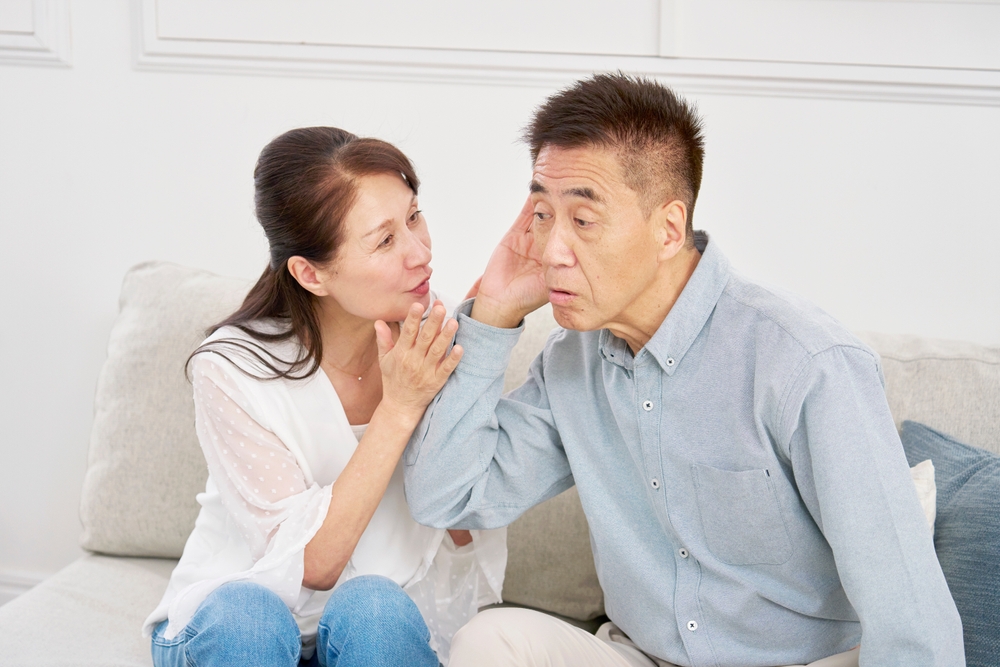
Hearing loss occurs when something affects your hearing, making you unable to hear sounds in one or both ears. Loss of hearing can either be permanent or temporary, depending on the type and cause.
There are three kinds of hearing loss:
- Sensorineural hearing loss, which involves the inner ear
- Conductive hearing loss, which involves your middle or outer ear
- Mixed hearing loss, which is a combination of sensorineural and conductive hearing loss
What are the Symptoms of Hearing Loss?
Loss of hearing can affect your professional, social, and personal life. If you recognize any of these tell-tale signs of hearing loss, it’s time to get a hearing test:
- Frequently asking people to repeat themselves
- Dizziness or balance problems
- Thinking others are mumbling
- Tinnitus or ringing in your ears
- Finding it hard to follow conversations, particularly in noisy areas or when talking on the telephone
- Feeling like there’s fluid or pressure inside your ear
- Needing to turn up the volume on your laptop, tablet, or TV
- Avoiding some social settings
- Not hearing important sounds during the day, like your cell phone ringing
Where Can You Get a Hearing Test in Chicago?
A hearing test is extremely important if you’re experiencing any symptoms of hearing loss. It can ensure the issue is addressed promptly and prevent significant damage.
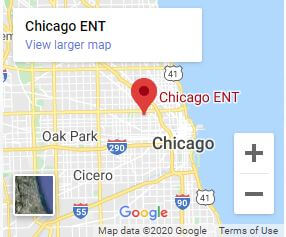
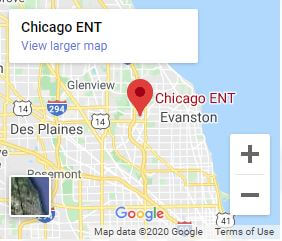
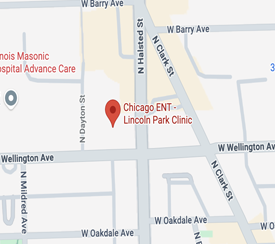
You can have your hearing test done at Chicago ENT. The comprehensive test will enable our experienced audiologist to assess your ability to hear.
If you have hearing loss, the test can determine the type and degree of the hearing loss. The tests are painless, non-invasive, and need no special preparation.
What Can You Expect During Your Hearing Test?
Generally, here’s what happens during a Chicago hearing test:
Medical and Hearing Health History

To start your hearing evaluation, our audiologist will want to discuss your health history, lifestyle, current medications you’re taking, family history of hearing loss, and the symptoms you’ve been experiencing. They’ll also want to know when you noticed issues with your hearing and whether your symptoms happened abruptly or gradually.
Additionally, they’ll ask if you’ve had any ear infections or injury to your ear or head. Trauma to these structures can lead to permanent or temporary hearing loss.
Your answers to these questions will give them a better understanding of what could be impacting your hearing. Our audiologist will then assess your hearing by performing a few tests.
Pure-Tone Hearing Test
This test measures the quietest sound you can hear at different pitches, ranging from low to high. If you have hearing loss, the audiogram will indicate the extent of your hearing loss.
Here’s what happens:
- You’ll sit in a soundproof room
- You’ll put on earbuds or earphones
- Your audiologist will use a machine known as an audiometer, which emits sounds at various pitches and volumes
- You’ll press a button, say yes, or raise your hand when you hear sounds
- Your audiologist in Chicago will record your responses on an audiogram
Bone Conduction Test
A bone conduction test enables your audiologist to assess the function of your auditory nerve and inner ear. It can determine whether your hearing loss is sensorineural or conductive.
For this test:
- You’ll sit in a soundproof booth
- You will wear a headband or a tiny device behind your ear
- Your audiologist will send sounds through the device, causing your skull to vibrate
- The vibration is sent to your inner ear
The outcome of this test will be compared to the results of your pure-tone test to identify the kind of hearing loss you have.
Speech Test
Speech testing entails listening to particular words that are repeated to measure how loud the speech should be for you to hear and understand it.
Here’s how the test works:
- You’ll insert earphones or wear headphones
- Your audiologist will say words at varying volume levels
- You’ll repeat what they say to gauge your sound recognition
Auditory Brainstem Response (ABR)
An ABR test checks the pathways between your brain and inner ear. It can assess your hearing if you are unable to complete a pure-tone test or have a brain injury affecting your hearing.
Here’s an overview of what the test involves:
- You’ll put on earphones
- Your audiologist will place electrodes on your forehead and ear, which will be linked to a computer.
- Specific sounds will be played through the earphones, and the electrodes will record how your auditory nerve and brainstem respond to the sounds
Your audiologist will review the computer printouts to interpret your test results.
Tympanometry
Your audiologist may perform this test to check if you have wax in your ear canal, fluid in your middle ear, or a ruptured eardrum that is affecting your hearing.
Here’s what the test entails:
- A small probe that resembles an earbud or earphone will be placed in your ear
- A tiny device attached to the probe will push air into your ear
- The air will make your eardrum vibrate, and measurements of the movement will be recorded in a tympanogram
- The graph will enable your audiologist to see how your eardrum moves
What Happens After a Hearing Test?

Your audiologist will discuss the test results with you after your testing is done. If the tests reveal problems with your hearing, they’ll explain what your results mean and recommend the next steps.
For instance, if you have mild to moderate hearing loss, they may suggest hearing aids and talk about the various options that can improve sound clarity and amplification.
Get on the Path to Better Hearing
Having a hearing test at Chicago ENT can help our expert audiologists catch hearing issues early and provide effective treatment to help you hear better, prevent further damage, and improve your quality of life.
Do you have signs of hearing loss? Schedule your appointment at Chicago ENT in Chicago, IL, today to have your hearing tested.